
How to Source Products from China
For Individuals and Small Businesses

Author: Juliet Ampah
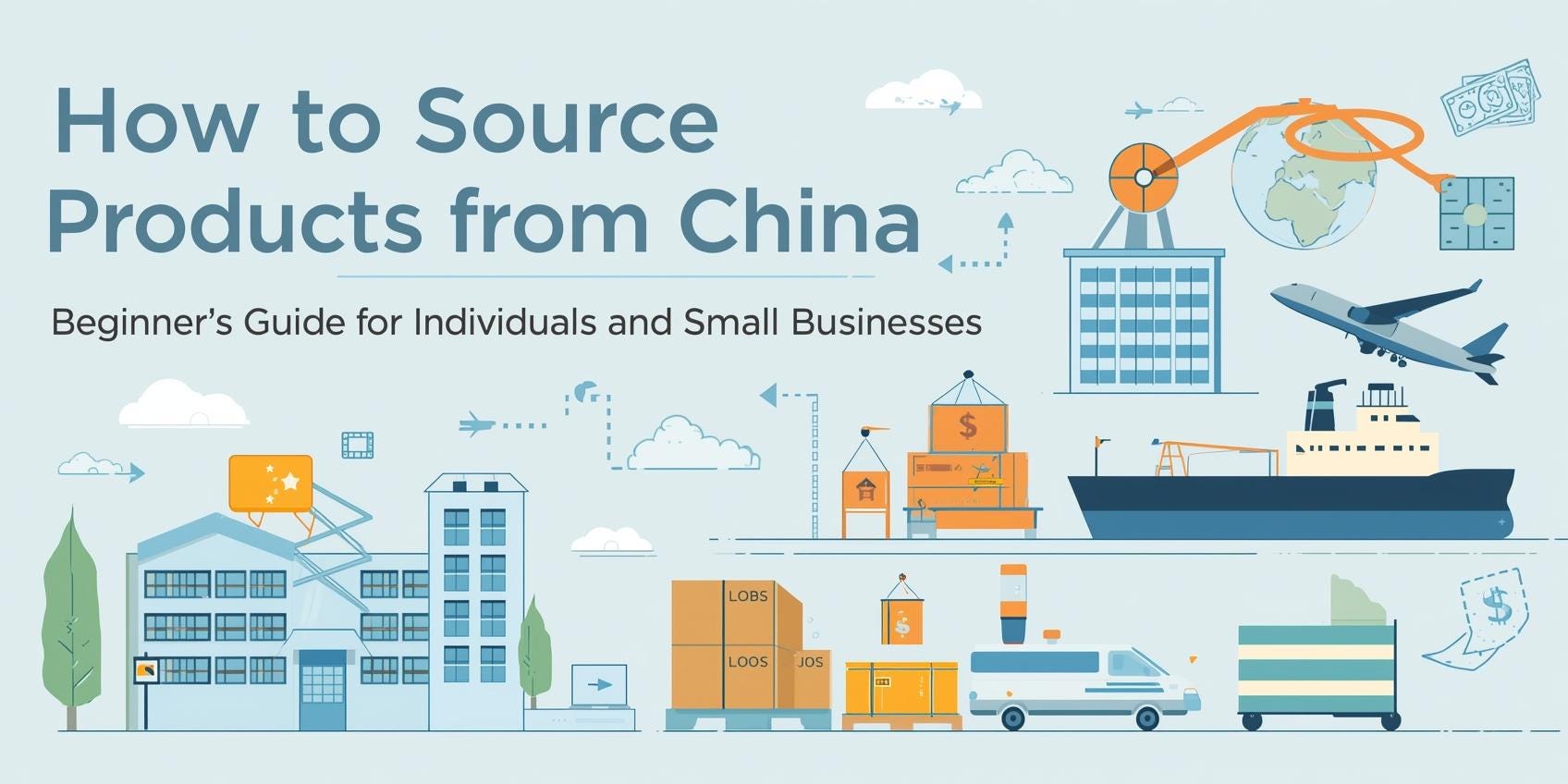
Starting a business or trying to source products on a tight budget can almost always feel overwhelming. One of the biggest decisions you will make when building your business is outsourcing your products from countries that speak a different language from yours. China is arguably the world’s most important manufacturing hub: it produces more than a third of global manufacturing output according to data from Statistica (2023). Millions of companies around the world rely on Chinese suppliers for their products. For a first-timer, understanding how to navigate China’s sourcing ecosystem is essential before you spend a dime.

This post guide explains step by step how sourcing works, gives you real data on major platforms such as Alibaba, 1688.com, Taobao, etc and which city in China is best for what products. It explains important industry terms like OEM (Original Equipment Manufacturer) and ODM (Original Design Manufacturer), and prepares you for the challenges of language barriers, lead times, and quality control of factories you outsource from. Along the way, you will also discover how an experienced partner like Julav Enterprise Limited, with over 11 years’ experience in and out of China, helps beginners cut costs, reduce risk and connect directly with suppliers.
Additionally, Julav Enterprise is sponsoring the next podcast episodes on Invisible-M Podcast to elaborate more on each step taken. There will also be interviews with industry-led experts, and webinar sessions as part of its e-learning process. You can learn directly from people who have navigated the sourcing landscape successfully.
1. Why Source from China?
China has been the “factory of the world” for decades. Its factories produce electronics, textiles, consumer goods, machinery parts, tools, and virtually every type of product imaginable. Chinese manufacturers can often produce items at lower unit cost than many other countries, because labour, materials, and production processes in China can be cheaper and highly automated.
For individuals and small businesses, sourcing from China offers two main advantages:
Lower unit costs, especially when buying in bulk.
Access to a massive variety of products, including customised goods that can help you stand out in your market.
However, these advantages come with challenges. Before we discuss those, it is important to know where to find suppliers in the first place.
2. Sourcing From Giant Platforms: Alibaba and 1688.com
There are many online platforms that connect buyers with Chinese suppliers. The two most talked about are Alibaba.com but there numerous ones such as 1688.com, Tmall, JD, etc.
Alibaba.com
Alibaba is a global marketplace designed for international buyers. The website and supplier communications are available in English, it accepts international payment methods such as credit cards and bank transfers, and it supports international logistics. This makes Alibaba easier for beginners who do not speak Chinese. Suppliers may be manufacturers, trading companies (middlemen), or a combination of both.
1688.com
1688.com is owned by the same parent company (Alibaba Group) but serves primarily the domestic Chinese market. This platform is where one can get in touch with direct supplier. But, the platform is almost entirely in Mandarin Chinese thus the need for Julav Enterprise to safely link you to the right supplier. Prices are generally lower than on Alibaba.com. Many of the suppliers listed on 1688.com are factories or direct manufacturers, rather than trading companies. This is why some buyers can get even lower costs on 1688 than on Alibaba.com.

On Alibaba, there are often layers of factors like more middlemen involved, export pricing, many middleman fees, international logistics, and handling costs whereas On 1688 and others, these layers are often absent, and that is because the products are priced lower. This means the same item may cost as much as 20–50 per cent less on 1688 when compared with Alibaba, though you must then handle translations and international logistics yourself or through an agent.
Why Lower Prices Matter
If a product costs £5 on Alibaba and £3 on 1688, that difference of £2 per unit could be the margin that makes your business viable, especially if you are selling online at a retail price of, for example, £15. Savings at the sourcing stage compound dramatically across larger quantities.
But it is vital to understand what you are signing up for. Lower prices are just one part of the equation. The other part is how easy it is to manage the entire process from enquiry to delivery.
3. OEM and ODM: What Do They Mean?
You may have seen the terms OEM and ODM used in supplier listings or heard on TV/radio. These are not fancy buzzwords but refer to two very different ways that products are made.
Original Equipment Manufacturer (OEM)
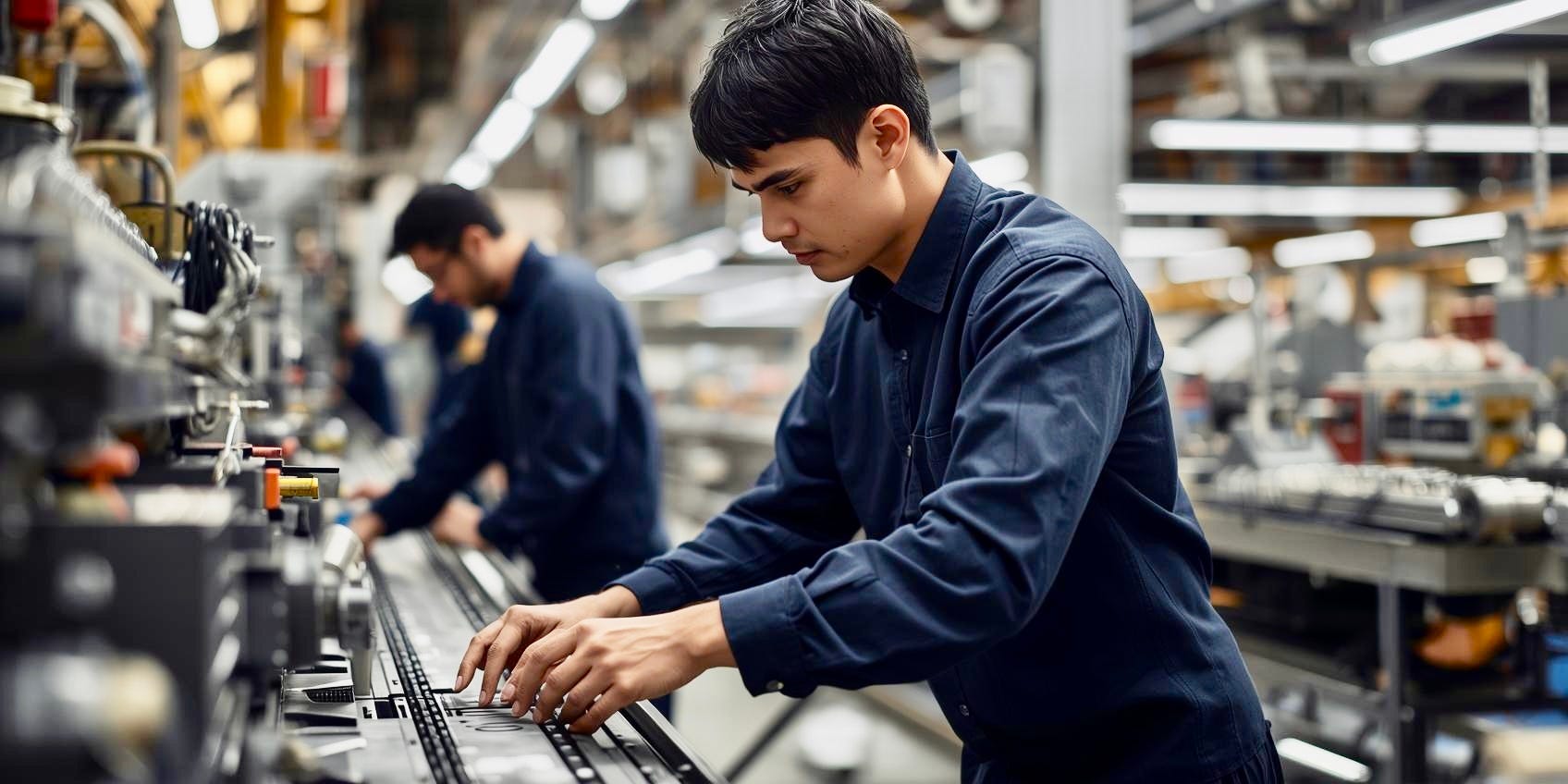
An OEM as mentioned earlier on, means Original Equipment Manufacturer. That is, Factories make products based on the buyer’s specifications. In other words, you design the product or have a very clear specification that the supplier follows. OEM suppliers are typically used when a brand wants a product made to its own design or needs custom features that are not available off the shelf.
Because you are driving the design, OEM products often have higher tooling costs, such as the cost of creating moulds or specific product components. The advantages are full control over the specifications and unique branding.
Original Design Manufacturer (ODM)
Here, An ODM supplier offers products they have already been designed but you can select a product from their catalogue and can usually customise minor aspects like colours, packaging, or branding. This means you do not need to invest in full product design or tooling, but you still get products that feel unique to your brand.
ODM is often an attractive option if you are a first-time entrepreneur because it allows you to launch your brand faster. Also, ODM products can be cheaper than OEM because the manufacturer has already invested in the design.
Understanding these terms helps you make better decisions about whether you want to design your own products or choose from existing designs and adapt them for your brand.

4. Pricing and Middlemen
One of the biggest differences between Alibaba and 1688 is the number of middlemen in the supply chain. A middleman is any party that stands between you and the factory. They may add value by handling customer communications, quality control, and international shipping, but they also add cost.
On Alibaba, many suppliers there are trading companies rather than factories. They source products from factories, handle export procedures, and add their own service charge. This makes things easier for beginners, but it also means higher unit costs. 1688, by contrast, tends to be much closer to direct factories, so the price you see is often closer to the cost the factory actually charges domestic buyers.
When you remove layers between you and the producer, your profit margin can improve, and you have more flexibility in pricing your product competitively.
5. Language and Communication Barriers
One of the biggest hurdles new buyers face when sourcing from China is language. Platforms like 1688 are in Mandarin, and most suppliers prefer to communicate in Chinese. Even on Alibaba, where there is English support, communication may still require translation tools.
Language affects everything: negotiating prices, explaining product specifications, understanding production timelines, and resolving quality issues. Mistakes caused by misunderstanding technical details or requirements can lead to costly delays or incorrect orders.
This is why many small business owners choose to work with a sourcing agent who speaks Chinese and understands local business norms. A sourcing agent helps you communicate with suppliers, negotiate better deals, interpret contracts, and resolve misunderstandings before they impact your business. But the question of how to the right supplier is inevitable.
6. Understanding Delivery Time and Lead Time
When sourcing from China or from any country, lead time means the time it takes from placing your order to when the goods are ready for shipment. After that, you still have shipping time factor, which depends on the method you choose.
Air freight is faster (typically a week to two weeks) but more expensive.
Sea freight is slower (often 30–60 days) but much cheaper for large orders.
Express couriers are fast but costly for very large shipments.
Delays are common, especially around major holidays like Chinese New Year when factories and logistics services shut down for weeks. You must plan lead times carefully to ensure stock arrives before you need to make sales.

For a beginner entrepreneur, delays can be one of the most frustrating parts of international sourcing. Delays affect customer satisfaction, cash flow, and inventory planning. This is why experience in logistics, freight management, and supplier coordination is invaluable.
The ability to adapt quickly to changing lead times or unexpected delays is called agility in business. Agility means having flexible plans, fast backup suppliers, and clear communication channels so you are not stuck when one part of your supply chain slows down.
7. Quality Control: Why It Matters and How to Manage It
Even if you find the right product at a great price, your profit and reputation depend on quality. Quality control is the process of making sure the goods you receive meet your standards and your customers’ expectations. Now, here is why quality matters:
Customers expect consistent products.
Poor quality leads to returns, complaints, and lost customers.
Quality issues can slow down your entire business.
Even when you do your homework, suppliers may deliver inconsistent quality because manufacturing tolerances vary or because your product specifications were not understood correctly. Independent third-party inspections before shipment help protect you from receiving defective goods.
You can also request physical samples before placing a large order. Samples allow you to check the product’s feel, materials, dimensions, and functions. Many suppliers on Alibaba and 1688 will send a sample for a small fee, which is often refundable if you place a bulk order.
8. Finding Reliable Suppliers
A supplier is reliable when:
They respond to messages quickly and accurately.
They can meet your quality specifications.
They deliver on time.
They are transparent with their production capabilities.
When you search for suppliers on platforms like Alibaba or 1688, take a look at metrics such as response time, transaction history, buyer reviews, and factory records. Suppliers with long histories of transactions and good reviews are more likely to be dependable.
You should always ask:
Are you a factory or a trading company?
Can you provide samples?
What quality control processes do you follow?
What are your payment terms?
What are your delivery terms?
These questions help you gauge whether you are dealing directly with a manufacturer or a middleman, which impacts price, communication, and delivery.
9. Sourcing Without Large Capital
Many people believe that sourcing from China requires a large amount of capital. While bulk orders can save money on unit cost, you do not always need to start with huge orders. There are platforms that often allow lower minimum order quantities (MOQs) , and even single units can be sourced if you are using a sourcing agent who can combine orders or negotiate on your behalf.
The key is to get access to the right network, understand pricing structures, and cut unnecessary layers that add cost. You need a partner who can help you access direct factories and negotiate the right terms that fit your budget and business model.

10. How Julav Enterprise Helps Beginners Source Successfully
Sourcing from China is not just about finding the lowest price. It is also about knowledge, business culture, and connections. This is where Julav Enterprise Limited comes in.
Julav Enterprise is a UK-registered firm with over 11 years of experience working in and out of China. They specialise in helping individuals, small businesses, and startups connect directly with reliable Chinese suppliers. Their expertise includes:
Training in Chinese business culture and negotiation techniques, just so you know how to communicate effectively with suppliers.
Access to direct contacts in China, including OEM and ODM manufacturers, reducing your dependence on middlemen.
Short courses on Chinese market demands, documentation, and logistics, so you know what paperwork and processes are required.
Support for sellers who want to trade their own products into or out of China.
Bridging language barriers for buyers who still prefer buying through middlemen, helping you negotiate better and understand supplier responses.
Julav Enterprise has an e-learning platform which also includes podcasts, interviews with industry-led experts, and live webinars. These sessions allow you to learn from professionals who have navigated the sourcing landscape successfully, ask questions in real-time, and gain insights you would otherwise take years to discover.
The platform focuses on short, practical training that empowers you to:
Understand basic Chinese business culture and etiquette.
Access the right contacts for your specific niche.
Communicate and negotiate in a way that gets results.
Learn how to interpret supplier responses and technical specifications.
Save money by cutting out unnecessary middlemen.
Whether you plan to sell products or source components for manufacturing, Julav Enterprise will break down the entire China sourcing process into manageable steps and explain each part clearly.
11. Final Thoughts: Keep Learning and Stay Prepared
Sourcing from China offers enormous opportunities for small-scale entrepreneurs, but it requires preparation, patience, and strategic thinking. Understanding sourcing platforms, knowing the difference between OEM and ODM, managing quality control, planning lead times, and overcoming language barriers are all essential to success.
Another thing is, China’s sourcing ecosystem is huge, and with the right partner and training, you can benefit from prices and supplier options that many businesses never access. If you are serious about building a business and sourcing from China, start with knowledge and support that helps you avoid beginner mistakes and unlock direct access to factories.
Julav Enterprise is here to guide you every step of the way, offering training, expert guidance, live webinars, and insider knowledge that will save time, money, and stress.
To gain a step by step insight, it is recommend you join our paid subscription.
#commisionEarned #FGP