
Rebuilding Ghana Through Absolute Cost Advantage, Not Starting Over

Author: Juliet Ampah
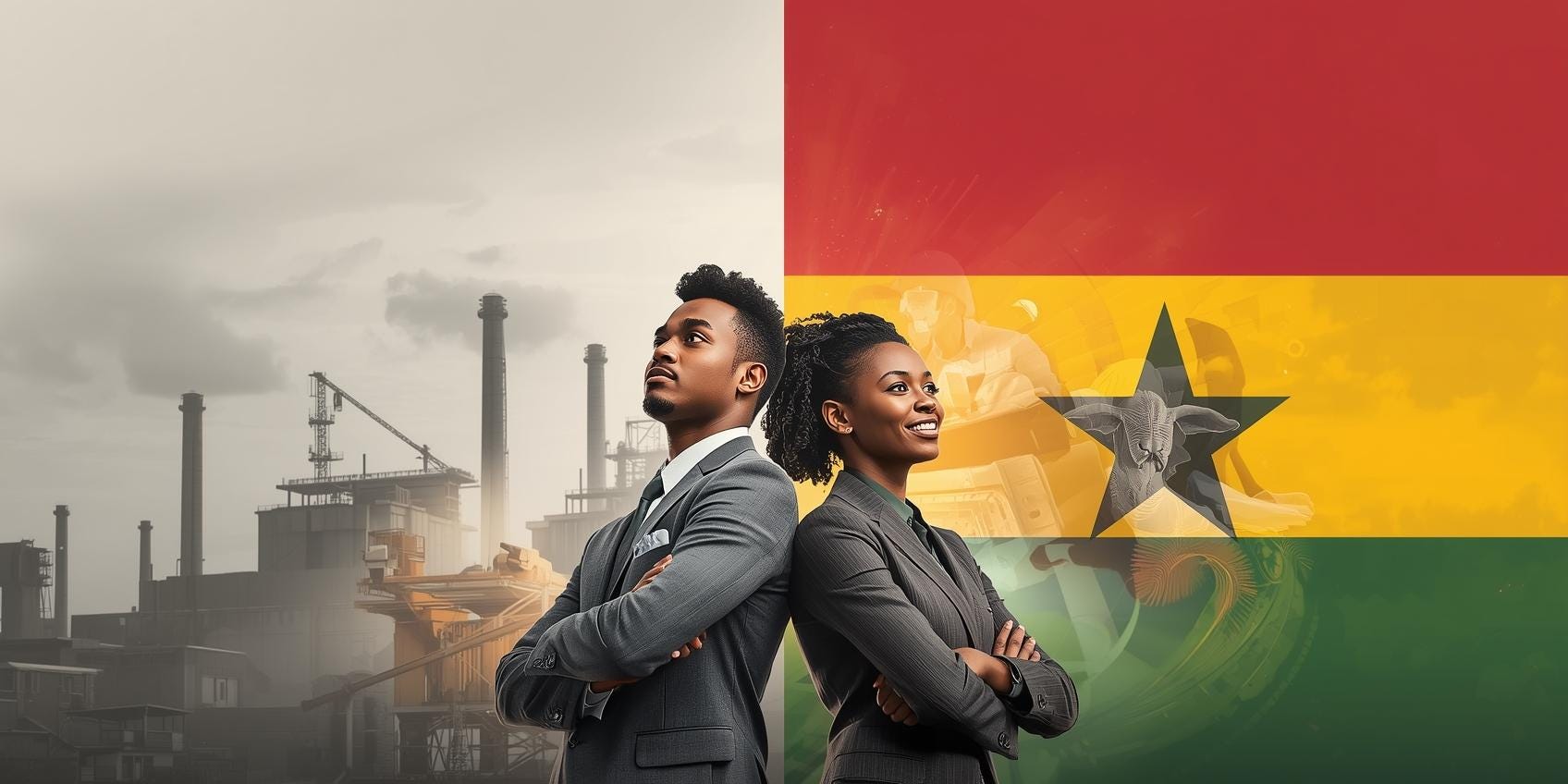
Economists teach that countries should specialise where they have an absolute advantage that is, making something using fewer resources than others would. Comparative advantage on the other hand means making something relatively more efficiently than other options. In practice, this means a nation focuses on what it can produce most easily and cheaply, and then trades for the rest with other nations. China is the classic example if you ask me: it has developed an almost unrivalled manufacturing machines. Today China accounts for about 30% of global manufacturing value-added thus making it by far the world’s top producer. No other country can match China’s highly optimised large-scale factories and supply chains at the same scale. For most products like technology, electronics to clothing, it is simply cheaper for other countries to buy from China than to build the whole industry from scratch.
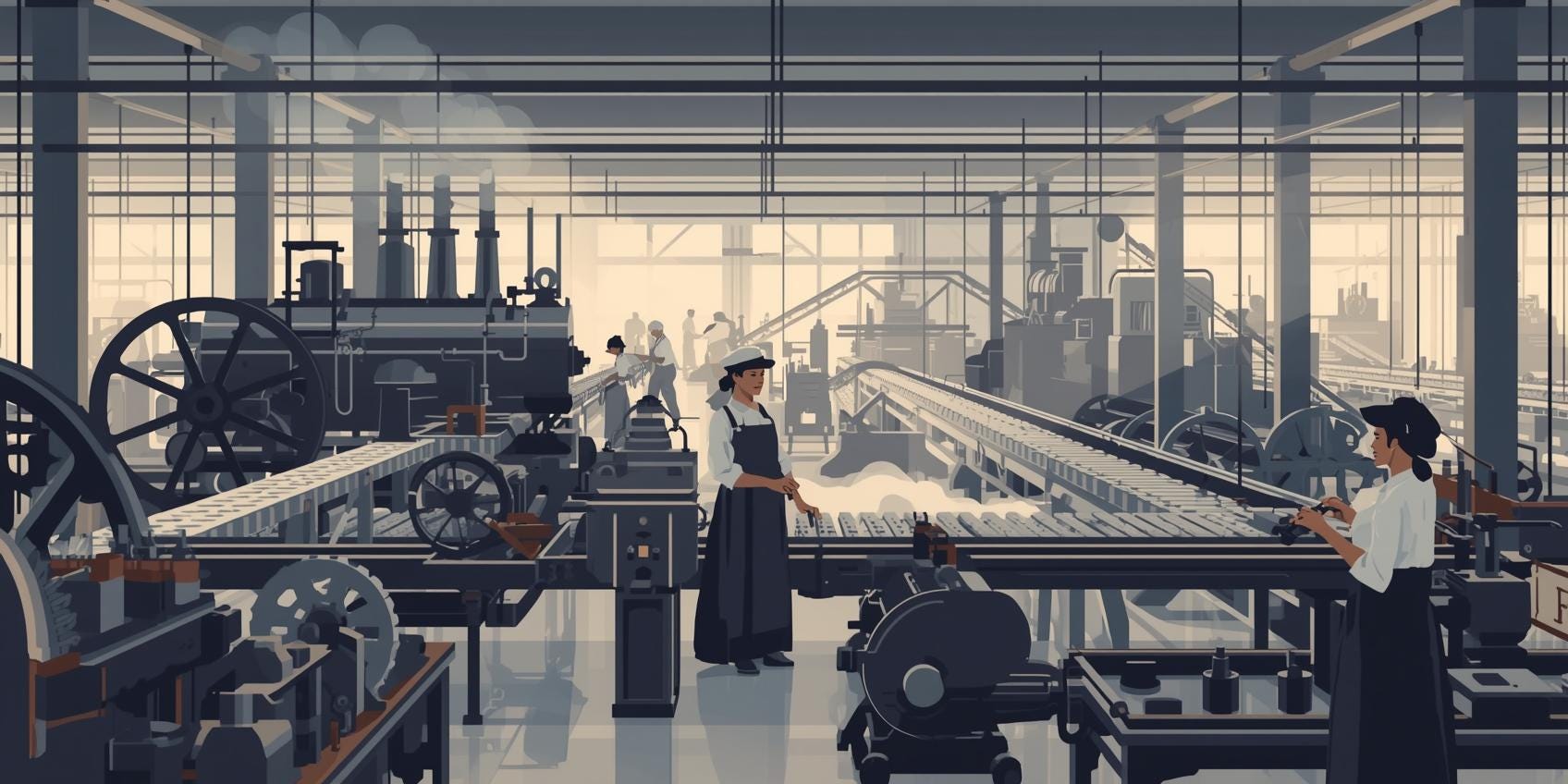
Modern Chinese factories employ skilled workers and efficient processes that give them an absolute cost advantage in many goods we use today. This supply-chain scale means that, despite rising wages, firms around the world still find it faster and cheaper to import from China than to re-establish production domestically. Not because these countries cannot produce but because China already mastered the process. This makes China enjoy an unmatched economies of scale, cheaper labour, and strong government support for manufacturing. In fact It has become the world’s “factory,” exporting everything from toys to advanced tech parts. If I should talk about pure cost, China’s vast, integrated production ecosystem is nearly impossible to replicate elsewhere. It should be an accepted fact.
In my opinion, not every country can or should try to copy China’s path. As economist Adam Smith first noted, countries do best by specialising in what they can produce most efficiently, and trading for the rest . I believe Ghana must do the same. Instead of trying to start from scratch, Ghana should rather focus on areas of clear advantage. I mean, focus on things only Ghana can offer cheaply and better than others. I am not looking at natural resources. Far from that. As a matter of fact, our natural resources alone haven’t gotten us far. Most MNCs managing our resources are foreign entities. Most of them operate legally and have been in existence since colonial days. Chunk of their profits leave Ghana. We can rather look in the area of our human resources and culture, our untapped natural products like seahorses (hippocampus) on our coast, and our rich tourism heritage. In these fields Ghana could create value more easily than trying to build heavy industry from almost nothing.
When it comes to manufacturing and technology, we should leave that to the leaders and focus on leveraging their strengths. Ghana can benefit by importing their finished goods or by attracting parts of their production plants, especially those that use raw materials that Ghana naturally supplies, which are expensive for China to import. Such manufacturing plants could strengthen our B2B (business-to-business) sector.
I say “parts of their plants” because, realistically, almost no big company produces everything from start to finish in a single location. Most of them sparsely locate their businesses in different locations due to different factors. An example, Apple inc. makes the iPhone body in China but develops the interface in the USA. Nike produces insoles in one country and assembles the finished shoes elsewhere. The strategy of siting business operations is a separate topic, but the key point I am making is that Ghana can encourage a company like China to locate part of its manufacturing in the country rather than trying to reinvent what the Chinese already excel at… their absolute cost advantage.
Advertisement

Ghana’s Human Advantage: Youth, Service, and Talent
Ghana boasts of its very young population. According to stats, about 42% of Ghanaians are under 25 years old. Our median age is just 22.4 years. This “youth bulge” as I call it, is a blessing. We have many energetic, trainable young people who are ready to work and learn more. Over time, investing more in education and particularly skills means Ghana can supply a large, skilled workforce more cheaply and often more loyally than some countries with aging populations.
Looking at Ghanaians abroad, there are many professionals who have also made a name for themselves abroad despite the hardship of being an African on another man’s land. Another example, Ghana contributed peacekeepers to UN missions all over the world. Today Ghana is ranked among the top contributors of UN peacekeepers, supplying thousands of troops to help stabilise conflict zones despite lacking enhanced infrastructure. Indeed, Ghana stands 7th globally by total number of peacekeepers according to World Peace Foundation. Ghana’s military is relatively small at home, but internationally it is renowned for its professionalism. Our troops bring training in the rule of law and solid discipline to UN missions.
Let’s go down history lane. Ghana’s service to the world began long ago. Starting from World War 1. During that period when Ghana was called the Gold Coast, young Ghanaian soldiers helped Britain in their fights. Ghanaians also served in the West African Frontier Force and played an important role in protecting the region and supporting the Allied side according to UK’s media national archives.
In World War II when Ghana was still the Gold Coast under Britain, Ghanaian regiments sent nine battalions who helped British Army in their fights. This shows that Ghanaians bravery is part of Ghana’s proud history of helping even before independence.
After fighting came peace-keeping. Guess who helped? Ghanaians. Aside peacekeeping assignments within Africa, Ghanaian troops have participated in missions in places such as Lebanon, Afghanistan, Cambodia, Kosovo, and the Middle East, where they helped protect civilians, monitor ceasefires, and support stability efforts. This role in international peacekeeping is a proud part of Ghana’s history and global contribution.
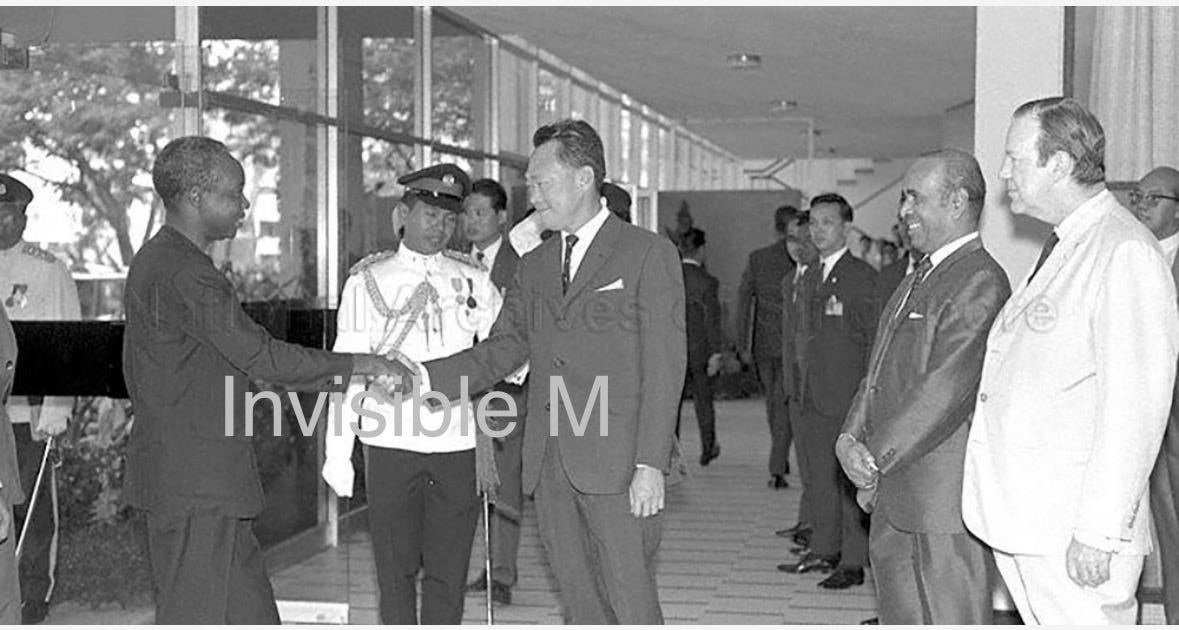
Let’s fast forward to recent. Across the decades, Ghanaian teachers and experts have also helped other nations. For instance, Ghana and Singapore built ties in the 1960s. Ghana’s first president Kwame Nkrumah supported Singapore who was then part of Malaysia, in the United Nations.
In the 1960s, Kwame Nkrumah of Ghana sat down with Lee Kuan Yew during his visit to Ghana and gave him advice on nation-building, governance, and development strategy. Lee Kuan Yew later used Nkrumah’s advice as inspiration to develop Singapore, adapting the lessons to Singapore’s unique context.
Even till date, Ghanaians continue to teach and train abroad. This highlights how Ghanaian educators abroad including China, Vietnam, Japan, England, the USA, working in fields such as science, economics, and other disciplines, are highly valued for their expertise and contributions. Their presence demonstrates that Ghanaian teachers are making an impact internationally, not just in language or culture, but across academic and professional fields.
These examples; soldiers, peacekeepers, diplomats, teachers show that Ghana has a soft power edge. Our country is known abroad for reliable, peace-loving people with a strong work ethic. That’s an absolute advantage in human capital. If Ghana expands programs for training soldiers, police, teachers, or health workers, we could even export such expertise. We know what export does for nations.
In fact, many neighboring countries already train their troops in Ghana. Thus by continuing to invest in education, military training, and civic values, Ghanaians can become one of our greatest exports…, often more valuable than raw materials in my opinion.
Ghanaian soldiers and peacekeepers: Ghana sent nine battalions to fight with Allied forces in WWII , and now ranks 7th worldwide in UN peacekeeping contributions .
Diplomatic support: In 1964 Ghana supported Lee Kuan Yew’s Singapore at the UN, helping Singapore avoid defeat .
Education & skills: Ghanaians teach abroad, such as lecturers in China , and Ghana trains foreign officers. Ghana is peaceful and democratic, boosting its reputation for good governance.
All I am suggesting is, if we should focus also on human capital, Ghana would play to its strength. We could train even more young people in fields like nursing, engineering, IT, and hospitality. These are fields where skilled Ghanaian workers can outshine competitors or meet global demand. Even if we do not yet have huge factories, we do have heads and character that the world recognizes aside natural resources. As another advantage, our shared English language and stable society make it easy for us to work with many countries amidst our passport’s limitation and sometimes, discrimination.
Advertisement

Ghana’s Tourism Boom and Cultural Wealth
Another area to focus on is tourism. Ghana is blessed with historic and natural beauty that the world loves. Almost every country can boast of tourist attractions but there is something special about Ghana’s. Our Castles and heritage sites like Cape Coast, Elmina, Assin Manso, including Northern region draw people all over. Our festivals, chiefs, wildlife, cultural dance, Afro-dance and beaches are all attractions in their own right. Ghana’s tourism sector is growing fast. in 2024 we welcomed 1.288 million international visitors and earned about US$4.8 billion in tourism revenues according to My Joy Online. That was a 12% increase from 2023 a historic milestone I would say. This shows that with the right marketing and services, Ghana can earn big funds from tourism. By comparison, few African nations match this growth.
Tourism is a classic comparative advantage for Ghana. Chinese love touring historic sites. Highest number of tourists to many countries include Chinese. Aside their business life, they love sightseeing, especially to places listed as trustworthy and safe. I haven’t turned blind eyes on ‘galamsey.’ But, there are over 1.4 billion people in China. There are a lot of good ones that love touring and learning about different cultures. We have resources like rich history, culture, stable democracy, and eco-tourism potential that others cannot duplicate. For example, many descendants of enslaved Africans around the world dream of visiting Ghana’s slave-trade castles. No factory abroad can recreate those emotional connections. Our heritage tourism thus has a unique power. We should invest more in hotels, local guides, tour services, security index and easier visas so that tourists can have even greater experience. While we invest in the aforementioned, we must also educate the public and make every Ghanaian feel belonged in a way that no one can take our kindness for granted like in the past.
Moving on, the friendly Ghana and pluralistic culture are assets as well. Word-of-mouth and social media posts from happy visitors will bring more tourists. For instance, Ghana’s flag carrier and diplomats can do more tourism promotion abroad as Nigeria did with Nollywood, or New Zealand with Lord of the Rings. A lot of the time when one sees posts about New Zealand, you would hear “… where Lord of the Rings was shot.” Some African countries also use sports sponsorships to boost their image; Ghana could pursue targeted partnerships like football or film festivals.., um ok our films are still a work in progress. But all I am saying is Ghana can form partnerships that fit our budget. Small steps like improving hotel standards or digital booking can have big effects. In short, tourism is a sector where Ghana has a natural cost advantage because we have the sights and culture already, so we should nurture it.
Advertisement: Bionic 570902 Robot construction kit.

Seahorses and Other Untapped Naturals
Ghana’s coastlines and forests hold many untapped natural resources beyond the usual cocoa and gold. One intriguing example is seahorses. These small marine creatures live in our shallow Atlantic waters, but we barely know their value. Yet seahorses are very valuable in Asia. In traditional Chinese medicine, dried seahorses (called hǎi mǎ) are believed to strengthen the body, treat infertility, and cure fatigue or arthritis . Many countries in Asia pay top prices for them. Globally, 15 million dried seahorses are traded every year, mostly from Africa to Asia.

Many West Africans especially Ghanaian fishermen, catch seahorses accidentally and sell them dried or bycatch. In fact few days ago, I saw a video of two Ghanaian women selling dried seahorse to some foreign men who spoke Chinese Mandarin in the background. The women sounded ignorant on the uses of seahorse. They rather called the buyers, ‘strange people,’ perhaps thinking the buyers were going to eat the seahorse as it was. As I watched, I said to myself “if only they knew the value of a seahorse.”
Ghana has been exporting seahorse since 1962 by alleged foreign entities. That can change. The atlantic ocean where seahorses thrive is huge. TRAFFIC’s analysis shows Ghana does export seahorse, also known as hippocampus. Export level may be less compared to Senegal’s exports. But perhaps it is because Ghanaian fishermen and communities often do not realize that these tiny fish fetch dozens of dollars each. Instead, dried seahorses sometimes end up as curio souvenirs or cheap fish bait. Meanwhile in some non-African countries, one seahorse picture alone cost money. Imagine the benefits of seahorse toys and statues production firms partnering with Ghanaians in Ghana.
Seahorses are highly valued in Traditional Chinese and other Asian countries’ Medicine. some used in teas, soups, or eaten dried. Many Asian countries recognise their medicinal properties, creating a strong, consistent demand.
Asia’s population alone is about 4.84 billion as at 2026. Even if just 10% of this population consumes seahorses sourced from Ghana, the market potential is enormous, representing significant revenue opportunities.
Interesting fact: While several coastal countries host seahorses, their populations are densest along the West African coast, where warmer waters provide ideal conditions. Ghana and Senegal have the largest concentrations, making them prime sources for supply.
It’s worth noting that seahorses are about 95% bone, with very little flesh. Their taste is slightly bitter, earthy, and medicinal, which is why they are primarily used for traditional medicine rather than as a food source. Despite this, their value in TCM remains high, making them a unique and lucrative resource.

Ghanaians can engage more in seahorse export by raising awareness and regulating trade. We could turn seahorses into real income for Ghana. Even the lightest seahorse , a few thousand sold to Chinese markets at maybe $5–20 each could mean hundreds of thousands of dollars. For example, Ghana could benefit if we manage it sustainably. This requires educating fishing communities and market women not to waste seahorses. Government can set a sustainable catch limits.
Ghana can even brand seahorse exports as “Made in Ghana” dried seahorses for Asia markets. It can be exported to anywhere it’s needed but I mention Asia because of its over 4.8 billion populace and how their patronage of products containing seahorse would do for Ghana; even if we get only 10% of them patronising. The government could partner with marine biologists to map seahorse habitats and train local divers to collect them responsibly. By doing this, Ghana gets paid for a resource we already have, instead of others taking it illegally. It’s a perfect case of focusing on our absolute advantage of our unique marine life. Of course we must be careful not to overfish . With smart policy, seahorses could become a steady income source for coastal communities. In a nutshell;
Seahorses in Chinese medicine: “Dried seahorses are one of the most valuable marine products” for TCM, used as health tonics allegedly.
Education needed: Many Ghanaian fishers don’t know their seahorses’ worth. Better training and community quotas could turn them into income.
Besides seahorses, Ghana has other niche products that can become our strength. Think of pearl millet, shea butter varieties, or specialty fish from Lake Volta or the coast. The principle is the same. find things we have in abundance that others need, and sell or export them intelligently rather than exporting only raw cocoa or gold. Each of these can give Ghana an edge if done sustainably and also with local value-add.
Rethinking Natural Resource Policy
I didn’t want to mention this part but well…Ghana is evidently well-endowed with timber, cocoa, bauxite, gold and more. However much of these natural wealth’s profits flow overseas. Foreign companies are often better capitalized, extract our gold and bauxite, and take the bulk of the value. We are known to be the second largest cocoa exporters in the world, yet is processed abroad. Switzerland has no cocoa but is ranked among the best in chocolate production. Meanwhile every foreigner I have personally gifted Ghana chocolate to, loved it better, except its hardness in cold climates. Ghanaian farmers and the economy as a whole, get a small slice of final product value. In this sense Ghana has struggled to gain from its resources. Well if Switzerland’s cost advantage is the chocolate production process, granted. I believe it is fair to partner with them to site parts of their manufacturing plants in Ghana while Ghana’s human resources do what she is best at. Win-win.
Talking about resources, other countries protect their resources more tightly. For example, China’s constitution declares that “all minerals are owned by the state.” In practice, foreign mines or joint ventures are rare in their country. In the United States, federal and state laws can severely restrict foreign control of land and minerals. In fact, several U.S. states have recently passed laws barring “foreign adversaries” from buying farmland, forests and even mineral rights allegedly. Idaho law now prohibits foreigners from acquiring mining claims or mineral rights on its land . The point is, the U.S. and China alike ensure their own citizens capture the gains from natural resources. Ghana has tried similar local-content laws yes, but enforcement needs to be stronger. In Ghana, we do not need to bar the existing foreign firms from what they are good at, but we can set laws for them to employ Ghanaians at top level management in these existing or future foreign entities.
For instance, Ghana’s Mining Regulations should require companies to submit localization plans that they must recruit, train and prefer Ghanaian staff at top level, and even set limits on expat senior workers just like they set limit on Ghanaian workers abroad. In theory, miners “give preference in employment to citizens to the maximum extent possible.” But in practice, some big mines still have many foreign managers while Ghanaians in such firms remain low-leveled. Ghana could ensure fairness in this area. For example, new mining contracts could mandate a Ghanaian CEO or board members, or require that a fixed share of profits stay in Ghana through local processing. The government should monitor closely.
Similarly for timber and cocoa industries need local content as well. Well… Ghana already has fair-trade and organic initiatives, but it still could do more. Example; She can insist that wood harvesters process lumber in the economy first, and not just ship the raw logs abroad. It will reduce their shipment cost while it gives Ghanaians jobs. win-win. Government can remind multinationals that if they extract Ghana’s wealth, they must also hire and train Ghanaians at all levels. Over time, this will build local skills and ensure that more of our resources’ value stays at home.
In short, Ghana should follow the example of strong resource nations by making foreign companies share power and expertise. We can still welcome investment, as always, but not at the cost of losing all control. By demanding qualified Ghanaian leadership roles and enforcing laws, it ensures that when foreigners come for our gold or cocoa, they leave behind jobs and knowledge, not just empty destroyed land.
Conclusion: Invest in People and Pride
In my opinion, Ghana’s future doesn’t lie in copying others, but rather in doubling down on what makes Ghana unique. Instead of trying to build manufacturing industry from scratch, we can use our abundant human capital and natural gifts. In addition, if we invest more in education and vocational training, Ghana could graduate more doctors, engineers, teachers and entrepreneurs. By marketing our cultural heritage and tourism, we will earn more foreign visitors and dollars. By sustainably harvesting resources like seahorses and enforcing rigorous local content laws, we will keep more wealth in Ghana and build expertise for the future.
All I am trying to humbly voice out is, Ghana can be a nation that trains the world’s talent, not just its cocoa or gold. But also by working smart, specializing wisely, and enforcing policies that favour our people, Ghana can reap bigger rewards from its own soil and spirit. The road may be long, but the examples of history show it’s possible if we use our absolute and comparable cost advantages, and never forget what Ghanaian excellence has already achieved. Thank you for reading.
Sources: This article draws on economics research and reports on trade and Ghana’s economy. (All quotes and data are from the cited studies and articles below.)
Investopedia, “Absolute vs. Comparative Advantage.”
Rhodium Group, China and the Future of Global Supply Chains.
China Briefing (Dezan Shira), China Manufacturing Industry Tracker 2024-25 .
Ghana Armed Forces (Wikipedia) – WWII Gold Coast Regiment.
Mothership.SG, Lee Kuan Yew’s Africa Trip (on Ghana-Singapore support).
Wikipedia list of UN peacekeeper contributors (Feb 2024).
China Daily (China Daily Global) – Ghanaian teacher in China.
PopulationPyramids.org – Ghana demographics 2025.
TRAFFIC (Wildlife Trade Report) – African seahorse trade and figures for Ghana .
MyJoyOnline (Ghana) – Tourism Diplomacy: Ghana’s 2024 tourism performance.
National Agricultural Law Center – State laws on foreign land and mineral ownership (Idaho example) .
Columbia Center on Sustainable Investment – Ghana Mining Local Content Guide.
Previous Post —> Learn ESL, IELTS, Business English and Crypto Trading Online | Pay with Crypto
Disclaimer: This article contains Amazon affiliate product advertisements. As an Amazon Associate, we earn commissions from qualifying purchases made through these links, at no extra cost to you. All opinions expressed remain independent and for informational purposes only.
Really strong case for leaning into absolute advantage over comparative. I dunno, the seahorse example floored me - the disconnect between what Ghanaian fishermen think is bycatch and what Asian markets will pay is wild. Makes you wonder how many other resources sit undervalued just becuase the supply chain knowledge isnt there.